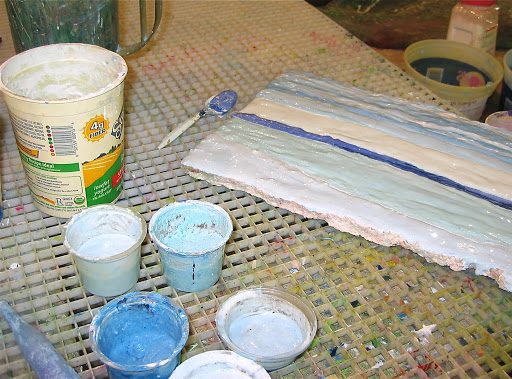
Painting with over beaten pulp can take a while to get comfortable with. Before going into a lot of detail of how to work with over-beaten pulp, let’s answer the important question of “What is over-beaten pulp?” Over-beaten pulp refers to pulp that has been beaten in a hollander beater for approximately 8 hours and is therefore slippery and gelatin-like. Most artists prefer to use abaca (which originates from the banana tree) or flax as over-beaten pulp. The consistency of over-beaten pulp allows it to be used like paint as it spreads easily onto the work surface and retains, without bleeding or fading, whatever pigment the artist chooses to add. The advantage of using over-beaten pulp over traditional paint is the textural surface and flexibility that the artist can achiever, giving the finished product a unique and personal look. The photo above shows pigmented over-beaten pulp in small containers and newly applied over-beaten pulp on a formed sheet of handmade paper. I’ll go into more specifics about how to use over-beaten pulp in my next blog.
Follow Us
Recent Posts
- Earth Day message for 2026. How using abaca to make my art supports planet earth.
- New lecture series: Garden Painting in the history of Art
- Five Winter Landscape paintings to remember the winter of 2026
- PULP PAINTING DEMONSTRATION and ARTISTIC INSPIRATION
- Ten reasons to give the gift of original art.